
Case Study 01 - The Founder
Case Study 01 The Founder
A Breakthrough in Dating Visibility & Performance
Contents
I. Scenario
In 2019, Chris Cabezas, thirty-one years old, after a painful breakup, committed to a deliberate search for a long-term partner, abandoning a high-bachelor lifestyle in favor of a more intentional approach.
His "must have" traits included:
A Warm & Gentle Personality
Strong Feminine Energy
An Emotionally Grounded Temperament
From 2019 through mid-2022, this effort failed to produce meaningful results with women aligned with his criteria. He focused on traditional ways to meet potential partners including introductions from friends, meeting through mutual social circles, and casually using dating apps like Hinge and Bumble. This effort produced tepid results at best. Chris found himself in a three-year relationship drought. The longer he was single, the more he frustrated he became.
In 2022, Chris signed a contract with a national matchmaking firm. The six-month engagement, at a fee of $5,000, produced four dates, none of which met his stated preferences. What was most frustrating was the lack of feedback from the service on what wasn't working; women who declined a 1st or 2nd date were not obliged to offer feedback at all. The experience left him grossly dissatisfied and formed a budding skepticism surrounding the efficacy of the matchmaking industry.
Nevertheless in 2023, he tried one more time, signing a second contract with a smaller, local matchmaking firm in Kansas. This engagement, at an even higher fee of $7,500, yielded fewer dates than the first, including one requiring cross country travel. Again, none resulted in a viable long-term connection.
Following the two unsuccessful engagements, Chris reassessed his approach. During his matchmaking, he had avoided dating apps due to historically poor performance. The question became whether those results reflected the platform—or his presentation within it.
II. Diagnosis
Reviewing the prior approach reveals a structural issue rather than a purely behavioral one.
Prolonged lack of success introduced behavioral distortions; a kind of mental baggage. Scarcity-driven thinking manifested as urgency, overinvestment, and emotional pressure during interactions—qualities that tend to reduce perceived attractiveness and trust. This is why offline approaches—including social circle introductions—produced no meaningful results over an extended period.
On dating apps, Chris's profiles consisted of conventional images: informal, inconsistently composed, and indistinguishable from the broader male population. These profiles likely performed near the median, resulting in minimal visibility and low inbound interest.
This created a reinforcing cycle:
Low Visibility
Low Response
Increased Frustration
Uncertainty as to the Root Cause of the Problem
No Strategic Adjustment
At the same time, several favorable underlying traits were present but under-leveraged:
Above-average Height (6'2")
Athletic build developed through consisted training
Retained hair and age-appropriate presentation
Willingness to invest in wardrobe and environment
The conclusion is straightforward: both online and offline presentation were insufficient to generate consistent attraction or trust.
III. Intervention
In May 2025, Chris identified new photography as a potential leverage point to improving his results on dating apps. A targeted intervention was executed.
A professional photography session was designed to replace all existing dating profile photos. The objective was not aesthetic improvement alone, but the construction of a cohesive visual narrative that matched his personality and lifestyle.
Each image was intentionally structured to communicate:
Stability and control over his life
Social and environmental competence
Ease, confidence and emotional steadiness
Settings included normal environments shot exceptionally well-coffee shops, city streets and the like. A few shots were added to communicate an engaging lifestyle-an airport visit and enjoying a sunny afternoon on a boat. As a lover of all things analog, one shot showed him writing on a typewriter he brought to the photoshoot.
The photoshoot happened one sunny afternoon in early July.
Notably, Chris’s initial reaction to the final images selected by the photographer was uncertainty. His internal calibration for what constituted an effective dating profile did not align with the selection criteria used by the photography team. Nevertheless, he did not protest or request changes; he deferred to external expertise.
Bios, "About Me" sections and other prompts were written in 20 minutes and added to the profiles alongside the new photos.
Finally complete, his new profiles were deployed across Tinder, Hinge, and Bumble on July 22nd, 2025.
IV. Market Response
The response to the new and updated profiles was immediate and dramatic.
Within the first 24 hours, the three platforms generated a combined 56 likes and 15 matches. By the end of the first week the number had grown to 367 likes and 99 matches.
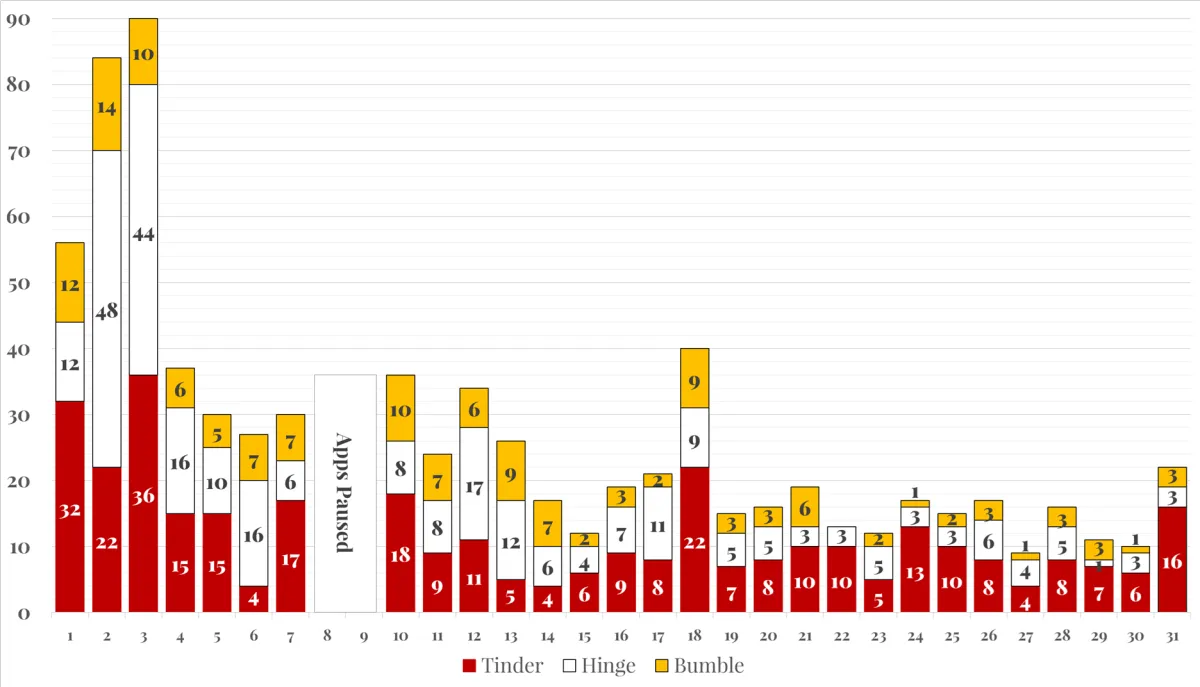
Graph 1: Likes per day during the first 31 days
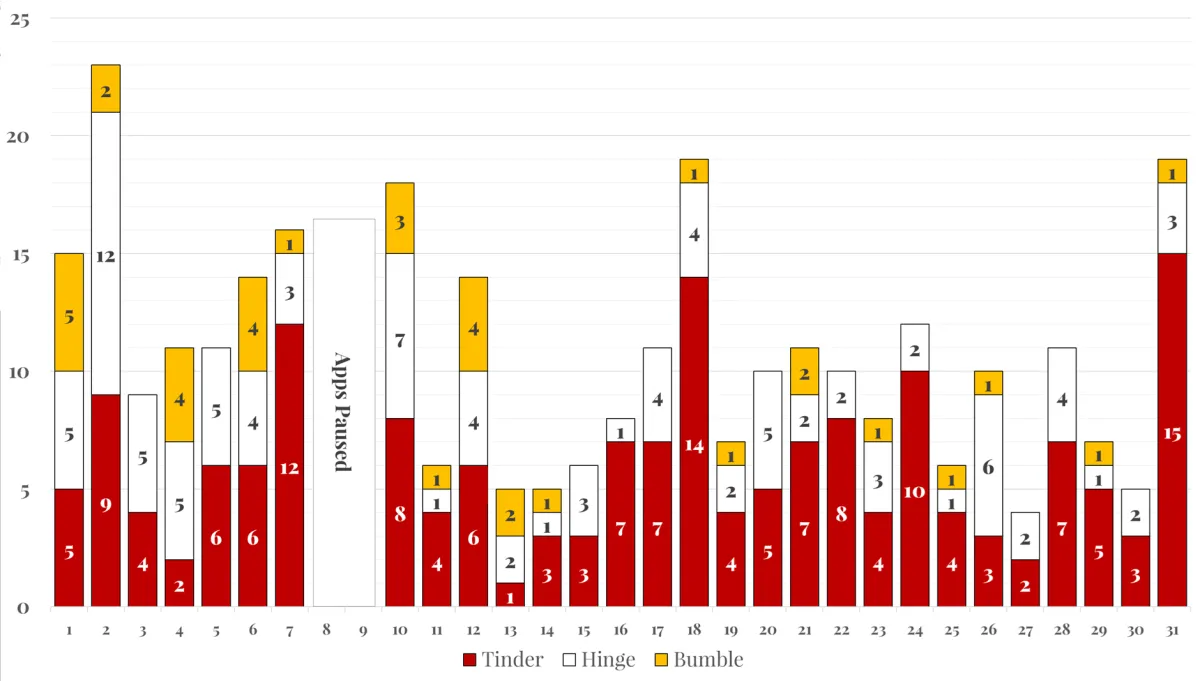
Graph 2: Matches per day during the first 31 days
This accelerated into sustained high-volume attention over the following weeks and months. At the end of Chris's six-month search, the results were as follows:
2,100 Inbound Likes
600 Matches
100 Phone Numbers Exchanged
35 Unique In Person Connections
51 Dates Conducted, 7 Second Dates,
1 Relationship Started
Chris's profile had entered an ultra-high visibility tier within the local market, resulting in consistent exposure to highly sought-after candidates.
Operationally, this introduced a new constraint: volume management.
Chris regularly maintained as many as thirty concurrent conversations and adapted his communication strategy accordingly. Early attempts to use "hard to get" messaging were abandoned in favor of direct, authentic interaction. Abundance enabled this shift; the volume of conversations was so high that no games needed to be played. Instead of writing what he thought would keep the conversations going, his communication was focused on finding common ground and nurturing compatibility.
V. Strategic Implications
The primary shift was not numerical—it was structural.
Under conditions of scarcity, decision-making is reactive. The objective is to secure attention by any means necessary. This is the source of a majority of poor behavior by men on dating apps.
Under conditions of abundance, decision-making becomes selective. The objective shifts to identifying compatibility and calmly scheduling dates with interested parties. If someone declined, nothing changed. Chris simply moved on to the next conversation, wishing them well as the conversation ended.
This allowed for more refined evaluation criteria, including:
Emotional stability
Reciprocity of interest
Alignment of values and lifestyle
Ease of interaction without forced escalation
Patterns emerged quickly. Interactions requiring excessive effort or behavioral adjustment rarely improved with time. Conversely, connections characterized by natural engagement and mutual interest progressed efficiently.
Chris also maintained a consistent standard of conduct across each interaction. Communication remained direct, respectful, and aligned with what could comfortably be expressed in a public setting. This minimized platform risk and maintained algorithmic standing.
Swipe behavior was selective (~17% right-swipe rate), reinforcing platform trust signals.
VI. Outcome
Over the course of 50 dates, variability in experience was expected. Not all interactions progressed, and performance was not uniformly optimized. Fatigue from communicating with so many potential dates introduced natural inefficiencies.
However, the objective was not perfection—it was exposure to a sufficiently large and relevant population of prospects that led to the ultimate match.
Near the conclusion of the six-month period, Chris met his current partner.
The relationship reflects a key outcome of the process: selection under conditions of clarity rather than urgency.
Chris founded Sovereign Suitor to make his experience available to as many men as possible. Now that a viable alternative to the modern manipulative behavioral patterns had been discovered, it would be a travesty to keep them to himself.
© 2026 Sovereign Suitor. All Rights Reserved. | Terms of Use | Privacy Policy | Cookie Policy | AI Policy | Social